GT-BTX PluS™: FCC gasoline octane boost and aromatics recovery
GT-BTX PluS™ is Sulzer's two-column extractive distillation technology engineered for FCC gasoline upgrading simultaneously removing sulfur compounds while preserving high-octane olefins, and recovering high-purity BTX aromatics in a single process. With two switchable operating modes, refiners can produce ultra-low sulfur gasoline with near-zero octane loss or shift to full aromatics production for petrochemical applications.
What is GT-BTX PluS™ FCC gasoline desulfurization technology?
GT-BTX PluS™ is a variation of Sulzer's proven GT-BTX™ extractive distillation technology, specifically engineered to process FCC (fluid catalytic cracking) naphtha streams. While GT-BTX™ targets conventional aromatics recovery from reformate, pygas, and COLO streams, GT-BTX PluS™ addresses the unique challenge of FCC gasoline: simultaneously removing sulfur compounds while preserving high-octane olefins, and recovering benzene, toluene, and xylenes (BTX) from the same stream — in a single two-column extractive distillation unit.
The technology operates in two switchable modes depending on market conditions and refinery strategy. In gasoline mode, GT-BTX PluS™ produces ultra-low sulfur FCC gasoline meeting the 10 ppm sulfur limit while fully retaining octane number — a performance impossible to achieve with conventional full-range hydrotreating. In petrochemical mode, the unit recovers high-purity BTX aromatics from FCC gasoline, transforming this gasoline machine into petrochemical producer.
Dual-Mode Flexibility
Unlike conventional FCC desulfurization processes that commit to a single output, GT-BTX PluS™ lets refiners switch between gasoline mode and petrochemical mode based on real-time market economics — maximizing the value of every barrel of FCC naphtha without additional capital investment.
How GT-BTX PluS™ extractive distillation works
1
Extractive distillation column (EDC)
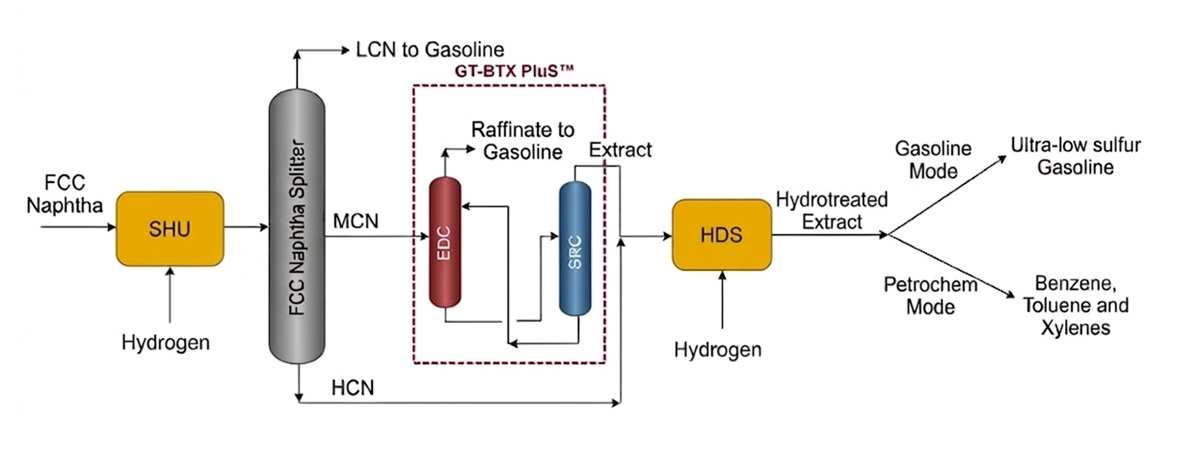
The optimum feed is the mid-cut fraction of FCC gasoline (70°C–150°C), which is introduced into the Extractive Distillation Column (EDC). In a vapor-liquid operation, Techtiv™ solvent selectively extracts both aromatic components and sulfur compounds into the column bottoms, while rejecting olefins and non-aromatics overhead as raffinate. This solvent-driven separation is the critical advantage of GT-BTX PluS™ olefins are diverted from the hydrotreater entirely, eliminating the root cause of octane loss in conventional desulfurization schemes.
3A
Gasoline Mode — Near-zero Octane Loss
In gasoline mode, the olefin-rich raffinate overhead is routed directly to the gasoline pool for blending without passing through hydrodesulfurization unit. Because olefins are preserved in the raffinate rather than being hydrogenated, the gasoline pool retains its full octane value meeting the strictest global clean gasoline standards (< 10 ppm sulfur) without the octane downgrade inherent in conventional full-range hydrotreating.
2
Solvent recovery column (SRC)
Rich solvent from the EDC base flows to the SRC, where the aromatics and sulfur fraction is stripped overhead and lean Techtiv™ solvent is recovered and recirculated. The SRC overhead containing BTX and sulfur compounds is then directed to a compact hydrotreater for sulfur removal.
3B
Petrochemical Mode — BTX Aromatics Recovery
In petrochemical mode, the aromatics and sulfur-bearing extract is processed through a conventional (existing) hydrodesulfurization unit that is tuned for higher severity to reduce sulfur to <1ppm, leaving only pure aromatics - benzene, toluene, and xylenes product.
The two operating modes of GT-BTX PluS™ gasoline mode and petrochemical mode can be switched based on real-time market economics. When aromatic spreads are favorable, the unit shifts to petrochemical mode to maximize BTX value. When gasoline margins dominate, the unit reverts to gasoline mode for ultra-low sulfur blending stock production with highest octane number possible. This operational flexibility is unique among FCC desulfurization technologies.
Why refiners choose GT-BTX PluS™ for FCC gasoline upgrading
- Near-zero octane loss — full gasoline value retained
- Dramatically reduced hydrogen consumption
- Dual-mode flexibility: Gasoline or petrochemicals
- High-value BTX from FCC gasoline — benzene, toluene, and/or xylenes
- Simple drop-In integration with existing FCC units
- Maximized refinery profitability per barrel



Evaluating GT-BTX PluS™ for your FCC refinery or clean gasoline project?
Our process engineers and licensing specialists are available for you.