-
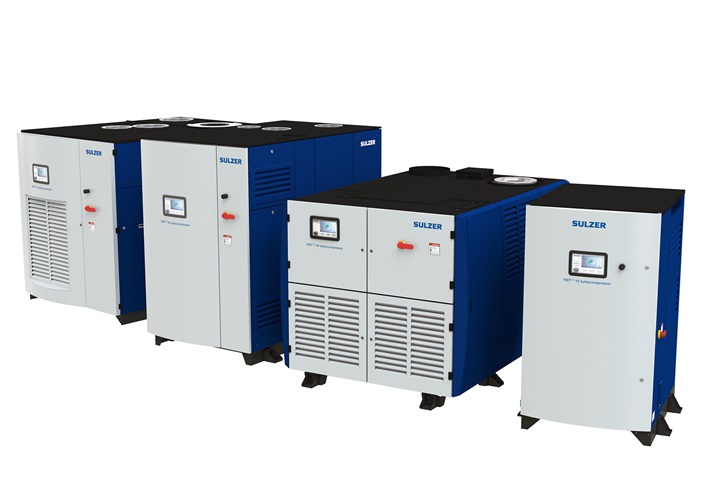 HST™ turbocompressorThe modern and silent HST™ turbocompressor features an advanced design with proven magnetic bearing technology and a high-speed motor driven through a built-in frequency converter.
Sulzer upgrade helps deliver savings of USD 157'000 per year
HST™ 40 turbocompressors cut energy consumption by 1.2 MW for Indiana wastewater treatment plant
Aeration processes in wastewater treatment plants are essential for removing biological contaminants, but many of the aging blowers are inefficient and noisy, as well as requiring regular maintenance and repairs. In Richmond, Indiana, the situation had reached a point where the legacy, multi-stage blowers, which were over 40 years old, needed to be replaced with a more cost-efficient and reliable solution. Sulzer’s HST™ 40 turbocompressors delivered many benefits to the aeration process, including helping cut energy costs by a third.
Elijah Welch, District Engineer for Richmond Sanitary District
Aeration is the heart of the wastewater treatment process – we had a coarse bubble aeration system and we wanted to improve the efficiency of the whole to process
Aeration processes in wastewater treatment plants are essential for removing biological contaminants, but many of the aging blowers are inefficient and noisy, as well as requiring regular maintenance and repairs. In Richmond, Indiana, the situation had reached a point where the legacy, multi-stage blowers, which were over 40 years old, needed to be replaced with a more cost-efficient and reliable solution. Sulzer’s HST™ 40 turbocompressors delivered many benefits to the aeration process, including helping cut energy costs by a third.
Energy consumption, and the associated costs, of wastewater treatment plants (WWTPs) are being increasingly scrutinized due to their scale and their impact on the global climate crisis. While achieving energy neutral treatment is the end-goal, taking steps now to reduce annual consumption figures will make this process much easier. Looking at individual processes, aeration always comes out top for energy demand so any reduction that can be made here will have an immediate impact on the bottom line as well as a significant improvement in sustainability.
Finding a new solution
The site had three centrifugal compressors, each rated at 800 HP (600 kW), and one of them was often offline for maintenance while the other two delivered air to the aeration basins. They had been in service for over 40 years and had reached the end of their service life. There were several pain points for the water treatment plant. The blowers had very little control to vary flowrates due to multistage technology offering limited turndown, and being inefficient, they generated a lot of heat, which required ventilation systems to be operational round-the-clock.
To resolve these and other issues, the plant upgrade project began with a search for replacement compressors, which led to several designs being appraised. Key criteria were flexible operation, the ability to reduce flowrates without affecting process efficiency; reliability and low maintenance costs were also high on the agenda – the magnetic bearings featured on the HST range of turbocompressors were an attractive feature that had proven performance in the field.
The main contractor appointed S&K Equipment Company to install and commission the new blowers. Having an existing relationship with the treatment plant, S&K Equipment was responsible for the maintenance of pumps and other rotating equipment on the site. The company made an assessment of the current aeration needs. Together with Sulzer application engineers’ suggestions for replacement compressors were developed.
Improving the aeration process
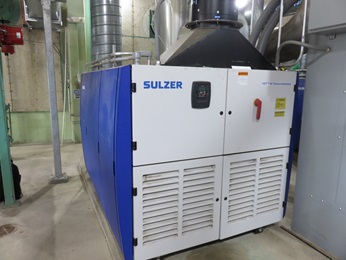
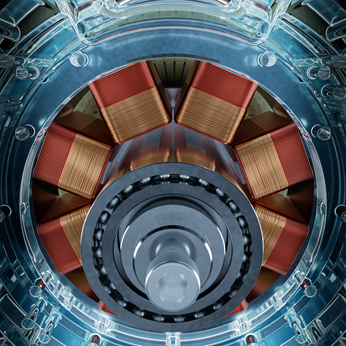
A presentation was made to Richmond’s engineering staff, offering the Sulzer HST turbocompressor as the best solution. Designed to deliver industry-leading efficiency and reliability, the HST uses a high-speed rotor that operates on magnetic bearings, so with no direct contact of parts, there is no wear. Direct drive means no gearbox and air cooling removes the need for any fluids in the machine. Annual maintenance is negligible, and noise levels for the HST 40 are just 69 dB.
More significantly, the HST units could deliver the same air flow provided by the 800 HP centrifugal compressors using just 500 HP. In addition, the new turbocompressors operate on standard 460 voltage, three-phase electrical supply, whereas the outgoing blowers required a medium, 4,160 voltage supply.
In conjunction with other upgrades to the aeration basins that included fine bubble diffusers and the addition of dissolved oxygen (DO) probes, the new process is much more efficient. The sensors feedback the oxygen levels, and the variable speed drives in the superior turndown of the HST 40 units allow them to adjust their output to match demand.
Cutting energy costs
The installation was completed without interrupting the aeration process at the plant. After the first unit was commissioned, consumption dropped by almost 100’000 kWh per month. At the same time, the new control system was installed; it was simple to operate, and after some initial training, the on-site staff were soon at ease with the process.
Steve Gott, CEO of S&K Equipment Company, commented: “The new turbocompressors have made a significant impact on the energy consumption at the plant as well as the maintenance routines. In fact, the staff at the plant don’t worry about the blowers anymore, they can focus on other areas that need their attention.
“We even took a nickel and balanced it on its edge on the HST 40 while it was running, and it didn’t fall over, these machines run really smoothly.”
The main contractor commented: “Upgrades to the secondary treatment system restored peak plant capacity to 36 mgd while reducing overall plant energy usage by 34%. The use of magnetic bearing high speed turbo blowers, diaphragm control valves, and DO probes allows for automatic dissolved oxygen control using a most open valve method while overcoming the challenge of three different water depths and therefore three different air pressures required for each pass of the aeration tanks.”
Improved flexibility and efficiency
Elijah Welch, District Engineer for Richmond Sanitary District, commented: “Aeration is the heart of the wastewater treatment process – we had a coarse bubble aeration system and we wanted to improve the efficiency of the whole process. The project included the move to fine bubble diffusers, the addition of dissolved oxygen (DO) sensors, as well as new blowers and an upgraded control system.”
The changes to the aeration system have made it more flexible, able to adapt to changing flow rates, maximizing efficiency. The move from centrifugal compressors to high-speed turbocompressors made a significant impact on energy consumption because they could be configured to deliver just the flowrate required. In the past, two of the three compressors would be running at rated output, irrespective of the demand by the aeration process.
The HSTs have been in operation for two full years, so energy consumption has been significantly reduced by about a third. In that time, the maintenance team has only needed to replace a couple of filters, and the turbocompressors have continued to work reliably. At the same time, energy prices continue to rise, making the savings all the more significant.
Savings for the future
Elijah continues, “The old compressors had essentially reached the end of their service life and needed to be replaced. The savings in maintenance and energy costs have contributed hugely to the return on investment period. Although our budgeting team created a capital expenditure (CAPEX) project, the short time in which we will recover these costs will be a major bonus.”
The overall upgrade project has received a number of awards, primarily for the improvements to capacity and energy efficiency. The introduction of Sulzer’s HST turbocompressors has certainly made a major contribution to the project’s success, as well as the efficient use of energy in the future and a reduced carbon footprint.
Elijah Welch, District Engineer for Richmond Sanitary District
Overall, having seen their performance over two years, we have made a good choice in selecting this equipment. They have been solid performers with no issues so far. We have been impressed with the savings that we have achieved and the reliability of our aeration process. The maintenance team is happy they have one less thing to worry about.